
MCN Singapore
Back to Insights
Blog

PHV Driver Video Incident Signals a Content Consumption Problem in Singapore's Gig Mobility Sector

2026.09.16 · 7 min read

A viral Facebook post showing a video playing on a dashboard-mounted phone during a private hire vehicle ride has surfaced a structural tension in Singapore's gig economy: the same smartphones that connect drivers to platform work have become vectors for in-cab media consumption, raising road safety, platform accountability, and content regulation questions that the creator economy cannot ignore.

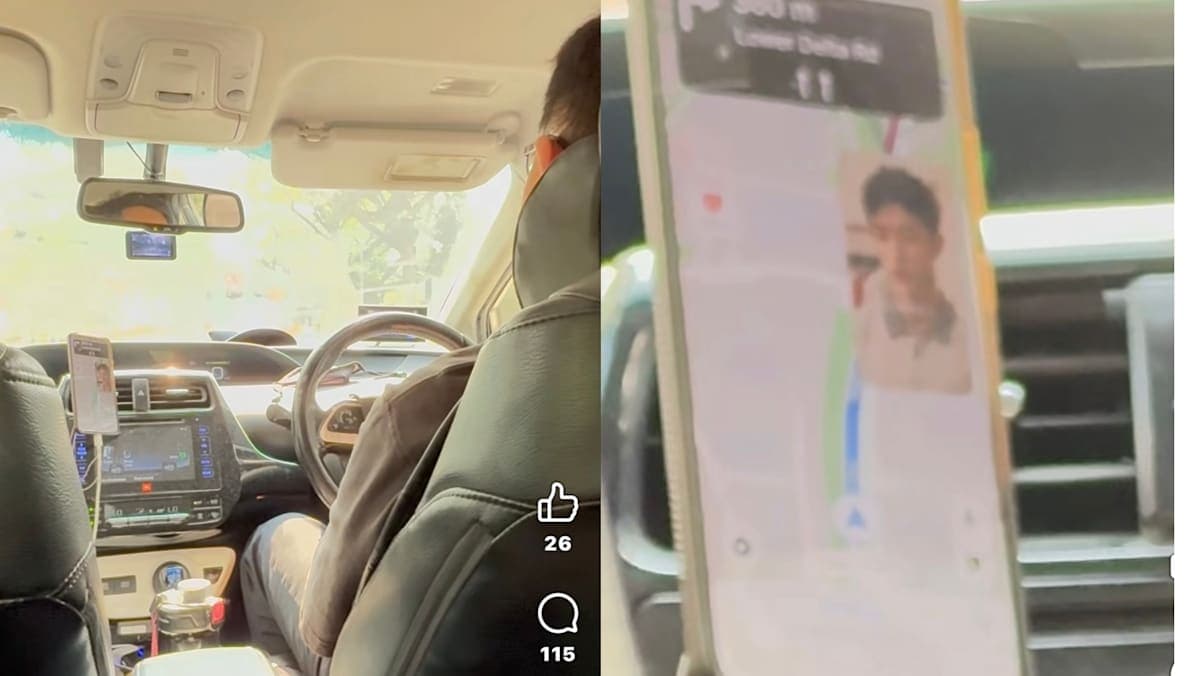
A smartphone mounted on a car dashboard cradle showing a video playing, photographed from the back seat of a moving vehicle in an urban Singapore streetscape.

A Single Incident Exposes a Broader Pattern in Singapore Ride-Hailing

PHV driver video consumption in Singapore has moved from isolated anecdote to documented pattern. According to reporting by 8days, a passenger filmed a video playing on a phone mounted near a private hire driver's dashboard during a 10-minute journey near Lower Delta Road, then lodged an official complaint with the platform before sharing the footage on the Facebook group Complaint Singapore. The passenger's post claimed that streaming dramas and videos had "practically become part of the standard package for private hire drivers in Singapore now" — a characterisation that drew both agreement and pushback from hundreds of commenters.

The incident matters beyond road safety. It sits at the intersection of platform-economy labour conditions, smartphone content delivery, and the creator economy's reach into non-traditional viewing contexts. This piece examines what the viral episode reveals about each of those layers and what it signals for brands, platforms, and creators operating in Singapore's mobile-first content environment.

Platform Content Delivery Now Reaches the Driver's Seat

The mechanism the passenger's footage illustrates is straightforward: a single Android-capable smartphone, mounted on a dashboard cradle for navigation and ride-hailing app use, is also a fully functional streaming terminal. Drivers waiting between jobs can open YouTube, a local drama app, or any social video platform and begin playback. The 8days report notes that it was not confirmed whether the driver was actively watching the video rather than simply having left it running from an earlier idle period — a distinction commenters raised repeatedly.

That ambiguity is itself the industry signal. The same device architecture that underpins Singapore's entire gig transport sector — a personal phone serving simultaneously as GPS, job-dispatch terminal, and entertainment screen — creates no technical barrier between a stationary viewing session and a moving one. Platform operators have enforcement mechanisms for dangerous driving (reported incidents can affect driver ratings and access), but passive media playback that is not conclusively tied to eyes-off-road behaviour sits in a grey area that neither ride-hailing platform policy nor the Road Traffic Act addresses with precision in publicly available documentation.

Creator Economy Implications: Reach, Context, and Brand Safety

For Singapore's creator and MCN ecosystem, PHV driver video consumption represents an unmonitored but apparently consistent viewing context. Content — whether a YouTube creator's drama-style vlog, a long-form podcast with visual elements, or a streaming platform serial — is being consumed on a moving vehicle's dashboard screen, in a setting where the viewing session is neither intentional viewing time from the passenger's perspective nor a safe attention context for the driver. Brands that place mid-roll or pre-roll inventory against content categories known to attract long-session binge behaviour (drama serials, reality formats, commentary videos) have no visibility into whether their creative is appearing on a dashboard mount at 60 km/h.

The passenger's post also illustrates how creator-economy content distribution logic — autoplay, algorithmic continuation, session persistence — removes the friction points that would otherwise end a viewing session when a driver picks up a passenger. Platforms optimise for watch time; that optimisation does not pause when the viewer starts an engine. For MCNs advising creator clients on distribution strategy, this context is unlikely to generate meaningful engagement metrics, but it contributes to raw view counts and completion rates in ways that inflate reported reach.

The public reaction captured in the 8days report also demonstrates the speed at which passenger-generated content (a back-seat recording) can itself become creator-economy fodder: the video circulated on a large Facebook community, generated news coverage, and prompted widespread debate — all within a cycle that content-monitoring teams at brand agencies should treat as a case study in uncontrolled brand-adjacent exposure.

What Platform Operators and Content Distributors Are Likely Watching Next

Two developments are worth monitoring. First, whether Singapore's ride-hailing platform operators — whose driver policies are set privately and updated periodically — respond to the renewed public attention by issuing clearer guidelines on in-vehicle device use beyond navigation. The 8days report notes that commenters themselves debated whether the appropriate channel was a platform report rather than a public post; the platform's response (or absence of one) will indicate whether the enforcement mechanism is considered adequate.

Second, whether content distributors or advertising networks operating in Singapore introduce contextual delivery controls that limit certain content categories on devices exhibiting motion signals. Such capability exists in mobile advertising infrastructure as a general technical matter, but its application to streaming content sessions is not standard practice. Neither development is confirmed as pending; both are logical responses to the pattern the incident represents. For Singapore creators and agencies, the more immediate practical question is whether platform-reported viewing environments will eventually be disaggregated enough to exclude captive or ambient viewing contexts from engagement benchmarks.

A Documented Tension in Singapore's Mobile Content Landscape

The PHV driver video consumption incident reported by 8days is a data point, not an outlier. It surfaces a structural feature of Singapore's gig-economy infrastructure: the multi-purpose smartphone creates ambient content consumption in environments where consumption was not designed to occur. For the creator economy, the implications span reach measurement, brand safety, and the limits of platform-level enforcement. The focus keyphrase connecting these threads is not road safety alone — it is the question of what counts as a viewing environment, and who is responsible for defining it.

Frequently Asked Questions

Singapore's Road Traffic Act requires drivers to keep their eyes on the road and prohibits handheld device use while driving. A phone in a cradle with video playing passively occupies a legal grey area: whether it constitutes a distraction offence depends on evidence that the driver was actually viewing it rather than merely having it running. The 8days report notes this distinction was explicitly debated by commenters on the original Facebook post.

Passengers can file an in-app report through the ride-hailing platform (Grab, Gojek, or similar) immediately after the trip, or report to the Traffic Police if they believe a Road Traffic Act offence occurred. The passenger in the 8days incident lodged an official platform report before posting footage publicly. Commenters in that thread noted the platform report channel as the recommended first step.

Technically, a video playing on a dashboard-mounted phone contributes to view counts and, depending on completion, to watch-time metrics on platforms such as YouTube, as no platform currently filters views by device motion state or viewing context. This means ambient or unattended playback in a moving vehicle can inflate raw reach figures without generating meaningful audience engagement for creators or brands.

Brand safety risk in this context is primarily reputational: a pre-roll or mid-roll advertisement appearing on a dashboard screen during active driving associates the brand with a road safety controversy if that session is recorded and goes viral. Standard brand-safety tools target content category and site adjacency, not device context, so this exposure type is currently outside routine programmatic safeguards used by Singapore media buyers.

Several commenters on Complaint Singapore argued that platform reporting channels exist precisely to handle driver conduct complaints without public shaming, and that posting footage online risks disproportionate consequences for the driver's livelihood. The passenger pre-empted this criticism in the original post, arguing that the driver bore responsibility for any occupational consequences of the behaviour.

Streaming and social video platforms use session-persistence and autoplay features optimised to maximise watch time; these functions do not pause or prompt the viewer when a device begins moving. A driver who starts a video during an idle period between fares will, by default, have that content continue playing unless they manually stop it. This is a known product design characteristic of major platforms, not a driver-specific setting.

Source: 8 DAYS