
MCN Singapore
Back to Insights
Blog

A viral A&E moment from Chinese variety show The Great Escape Season 8 shows how unscripted talent content drives cross-border fan engagement

2026.09.23 · 7 min read

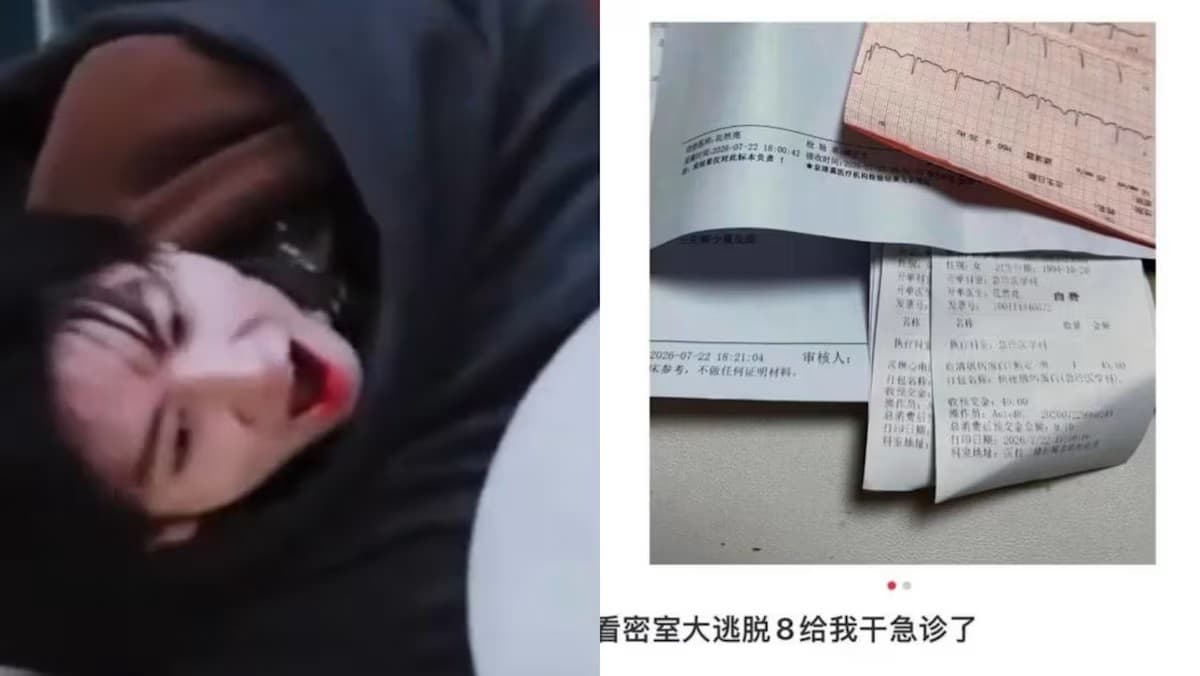
When a viewer's hospitalisation after laughing at Chen Zheyuan on The Great Escape Season 8 trended online, it illustrated a measurable mechanism in Chinese variety programming: unscripted physical comedy creates the kind of shareable, emotionally intense content that builds celebrity IP value across regional audiences — including Singapore's Chinese-language entertainment market.

Woman Ends Up In A&E After Laughing Too Hard At Chinese Actor Chen Zheyuan On Escape Room Variety Show - 8days

A medical incident becomes a social media signal for Chinese variety show fan engagement

Chinese variety show fan engagement rarely surfaces in emergency room records, but a July 2026 incident involving The Great Escape Season 8 made that link literal. According to reporting by 8days, a viewer shared her A&E visit documentation on social media after laughing so intensely at a segment featuring Chinese actor Chen Zheyuan, 29, that she was diagnosed with respiratory alkalosis — a condition caused, her doctors noted, by 'laughing uncontrollably for several minutes'. The hashtag 'Chen Zheyuan made a viewer laugh into the emergency room' subsequently trended online.

The incident is, on its surface, anecdotal. What it signals for the creator economy and brand-collaboration market is more structured: fan-generated content sparked by a single variety show segment cascaded into trending discourse without any production-side seeding, demonstrating the organic amplification potential that Chinese variety formats — and the celebrity IP attached to them — continue to generate among digitally active audiences in the region. This piece examines what that mechanism looks like, and what it means for agencies and brands working with C-entertainment talent in Singapore.

Unscripted physical comedy is the content format producing the highest-intensity reactions

The Great Escape is a long-running Chinese variety franchise in which celebrity guests collaborate to complete escape room challenges. In the episode reported by 8days, Chen Zheyuan appeared in a human pinball game segment, encased in a bulky protective suit inside a sleeping bag, able to control the ball only with his body and head. Fellow cast members compared his movements to a seal. The segment's comedy derived entirely from the physical constraint and Chen's visible struggle — not from scripted dialogue.

This format structure matters commercially. Unscripted physical comedy produces reaction clips that are inherently short, loopable and describable in a single sentence — properties that make them well-suited to short-video redistribution on Douyin, Xiaohongshu, and the Chinese-language content ecosystems that Singapore audiences also access. The fan comments reported by 8days reinforce this: one viewer noted watching late at night and 'not daring to laugh out loud', suggesting consumption in a private, mobile-first context typical of short-video platform behaviour. When a clip travels far enough to generate secondary UGC (user-generated content, meaning audience-created posts responding to original content), as this one did, the celebrity at its centre accumulates what the industry terms 'moment equity' — associative recall that persists beyond the broadcast window.

What the Chen Zheyuan trending moment means for brands and agencies active in C-entertainment

For Singapore-based brand managers and creator agencies that licence or partner with C-entertainment talent, the incident is a case study in asymmetric virality: a single variety appearance by Chen Zheyuan generated trending social volume that no sponsored post budget directly purchased. Brands attached to Chen Zheyuan at the time of the episode's broadcast — whether through endorsement, co-branded content, or variety show product integration — would have received incidental impression uplift from the trending hashtag without incremental spend.

The practical implication for agencies is timing. Variety show recording and broadcast schedules in Chinese productions typically run months apart, and talent managers who track broadcast dates can align activation windows — social posts, affiliate drops, limited product launches — to coincide with episodes likely to generate peak organic volume. The challenge is prediction: physical comedy segments are by definition unscripted, so the specific moment that goes viral cannot be planned, only anticipated at the format level. Agencies working with Chinese variety-adjacent talent in Singapore should therefore build flexible activation frameworks rather than fixed campaign calendars tied to specific episode content.

The broader pattern: C-entertainment talent IP crossing into Singapore audience behaviour

The 8days report is itself a data point. That a Singapore entertainment publication covered a Chinese variety show segment — mediated through a fan's social media post — indicates that C-entertainment fan communities in Singapore are active enough to generate editorial attention in the local English-language press. This is consistent with the broader regionalisation of Chinese digital content, accelerated by short-video platforms that do not enforce strict geographic content boundaries.

For the Singapore creator economy specifically, the implication is that C-entertainment celebrity IP functions as an upstream influence on local audience taste and engagement patterns. Local creators who produce reaction content, commentary, or derivative formats referencing Chinese variety shows are effectively tapping an existing attention pool. Agencies that can bridge C-entertainment IP with Singapore-market brand mandates — localising product context while retaining the original emotional register — occupy a structurally advantaged position in pitching cross-border campaigns. The Great Escape Season 8 incident is one data point; the underlying fan engagement dynamic it represents is a durable feature of the regional content landscape.

The Chen Zheyuan A&E story is an index of a wider Chinese variety show fan engagement pattern

Individually, a viewer's hospital visit is a curiosity. Contextualised within the mechanics of Chinese variety show fan engagement, it illustrates how unscripted talent moments generate organic social volume that brand and agency practitioners can orient activation timing around, even when the specific viral trigger cannot be scripted in advance. The Great Escape Season 8 and Chen Zheyuan's appearance on it did not require a coordinated influencer campaign to trend — the format and the talent's physical performance did that work. Understanding why that mechanism functions is the prerequisite for making use of it commercially in the Singapore market.

Frequently Asked Questions

The Great Escape is a Chinese variety franchise in which celebrity guests complete escape room and physical challenge segments together. Its format relies on unscripted reactions and physical comedy, which produce short, emotionally intense clips well-suited to short-video redistribution. According to 8days, a single physical comedy segment featuring Chen Zheyuan in Season 8 generated a trending hashtag after a viewer's hospital visit was posted to social media.

Chen Zheyuan is a 29-year-old Chinese actor who appeared as a guest on The Great Escape Season 8. His relevance to Singapore is indirect but measurable: 8days, a Singapore entertainment publication, covered the fan incident as a standalone story, indicating that C-entertainment fan communities in Singapore follow his work closely enough to generate local editorial attention.

When a variety show segment trends organically, brands associated with the featured talent at that moment receive incidental impression uplift without additional spend. The mechanism is asymmetric: a single unscripted moment can generate social volume disproportionate to any paid activation. The commercial opportunity lies in timing brand touchpoints — posts, drops, integrations — to coincide with peak broadcast windows for episodes likely to generate high engagement.

Specific viral moments within unscripted formats cannot be predicted reliably, because physical comedy and spontaneous cast reactions are by definition not scripted. Agencies can, however, identify formats historically associated with high-engagement segments — such as physical challenge games within escape room variety shows — and build flexible activation windows around broadcast dates rather than fixed campaign calendars tied to specific episode content.

Moment equity refers to the associative recall a talent accumulates when a specific on-screen moment circulates widely. When audiences encounter the talent's name or image after a viral segment, the emotional memory of that moment is reactivated. For brand managers, talent with strong moment equity carries residual attention value beyond the broadcast window, making post-episode activation timing commercially relevant.

The 8days report indicates yes: a Singapore English-language entertainment publication covered a Chinese variety show fan incident as standalone editorial content, which implies a local readership with sufficient interest in C-entertainment to justify the coverage. For local brands, this means Chinese variety-adjacent talent can reach Singapore audiences through existing fan engagement patterns without requiring locally produced content.

Short-video and content-sharing platforms including Douyin and Xiaohongshu carry clip content from Chinese variety productions, and these platforms are accessible to Singapore-based audiences. Fan-generated commentary and reaction posts on these platforms — as well as on broader social media — are how moments such as the Chen Zheyuan A&E incident transition from a single viewer's post into a trending hashtag, per the 8days report.

Source: 8 DAYS ↗